

Nikau Hindin
The work of return
Some forms of knowledge are passed down so consistently that their survival is never questioned. They move from one generation to the next through everyday practice, becoming part of the rhythm of life. Others are not afforded the same continuity. They survive in fragments, in stories, in archives, in place names, in memory. Their presence remains visible, but the pathways that once carried them forward become harder to trace.
The story of aute sits within this space. Once a valued and widely used material throughout Aotearoa, barkcloth existed as part of a broader network of relationships connecting people, environment, knowledge, and practice. Like many forms of mātauranga disrupted through colonisation, much of that knowledge was displaced, leaving behind only traces of what had once been commonplace.
To engage with that absence requires a particular kind of commitment. Not because the answers are hidden, but because there is no single answer waiting to be found. The work asks for patience. It asks for observation. It asks for a willingness to move carefully between what is known, what can be learned, and what must be rediscovered through practice.
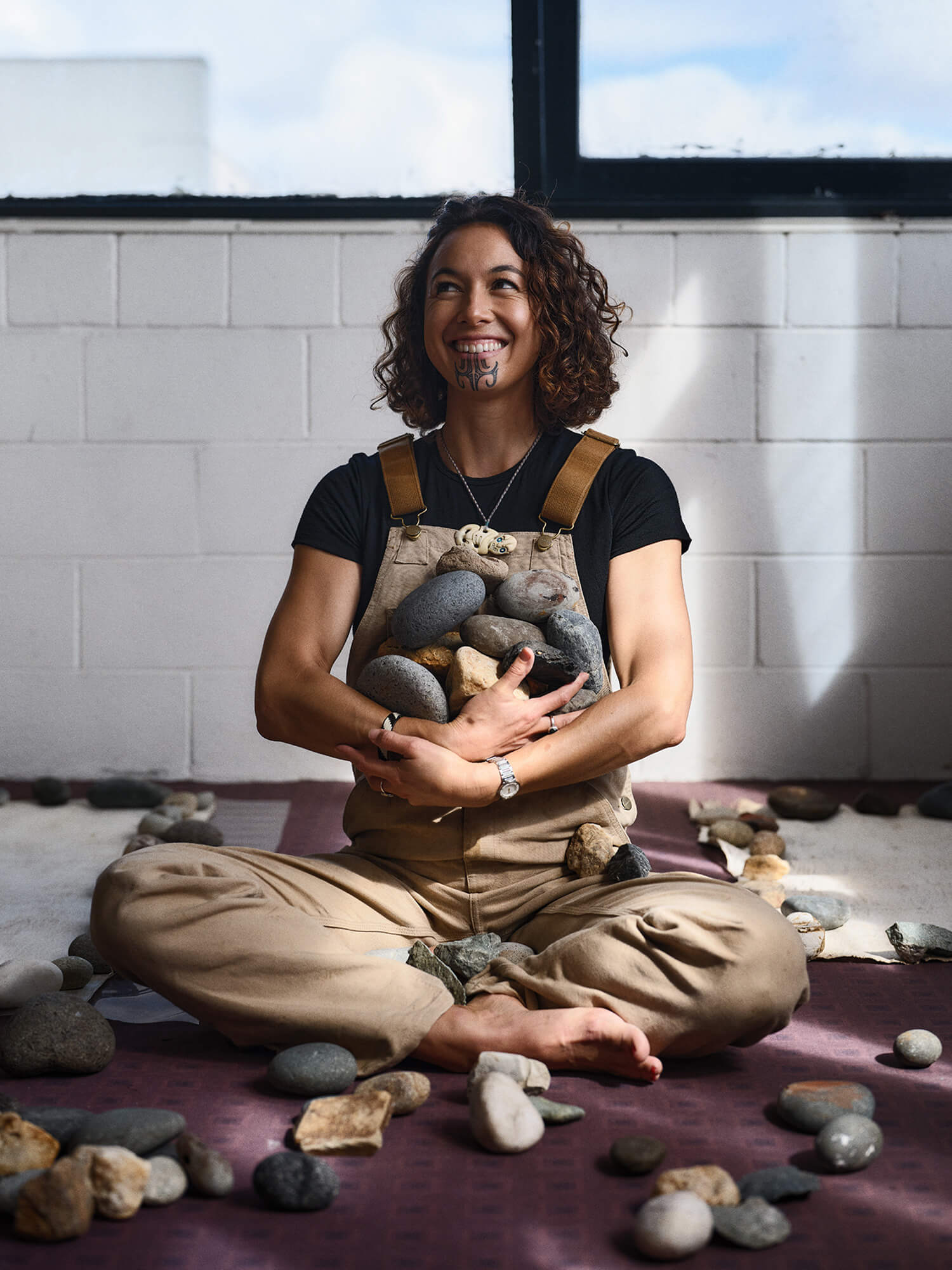
This is where Nikau Hindin's work becomes significant. Not because she is looking backwards, but because she is thinking forwards. Her practice is often described through the language of revival, yet what emerges here feels less concerned with restoring the past than with creating the conditions for a future. The cultivation of aute, the making of cloth, the gathering of pigments, the study of maramataka, and the transmission of knowledge are all part of a much larger undertaking. The goal is not simply to make objects. It is to ensure that a practice can live again.
There is a generosity in that approach. Throughout this conversation, aute is never framed as individual achievement. It exists within relationships. Between teachers and students. Between Māori and the wider Pacific. Between whenua and maker. Between those who carried knowledge before and those who will inherit it next. The work gains its strength not from ownership, but from its ability to be shared.
Perhaps this is why the practice feels so deeply relevant today. In a world increasingly driven by immediacy, aute operates according to a different measure of time. Trees are planted knowing they may benefit people decades from now. Skills are developed over years rather than weeks. Knowledge is accumulated slowly, often through repetition, failure, and careful observation. The process cannot be rushed without losing something essential.
Beneath the cloth, beneath the tools, and beneath the material itself sits a larger question about responsibility. What does it mean to inherit something incomplete? What obligations come with carrying knowledge forward? And how does a generation ensure that what was nearly lost is not only protected, but allowed to grow?
The answers are found not in declarations, but in practice. In returning to the work day after day. In tending relationships. In paying attention to the seasons. In understanding that some of the most meaningful contributions a person can make may only be fully realised long after they are gone.
That understanding runs quietly through everything Nikau does. It is present in the patience of the work, in the scale of the vision, and in the belief that culture is not preserved through admiration alone. It survives because people choose to live it, share it, and carry it forward.
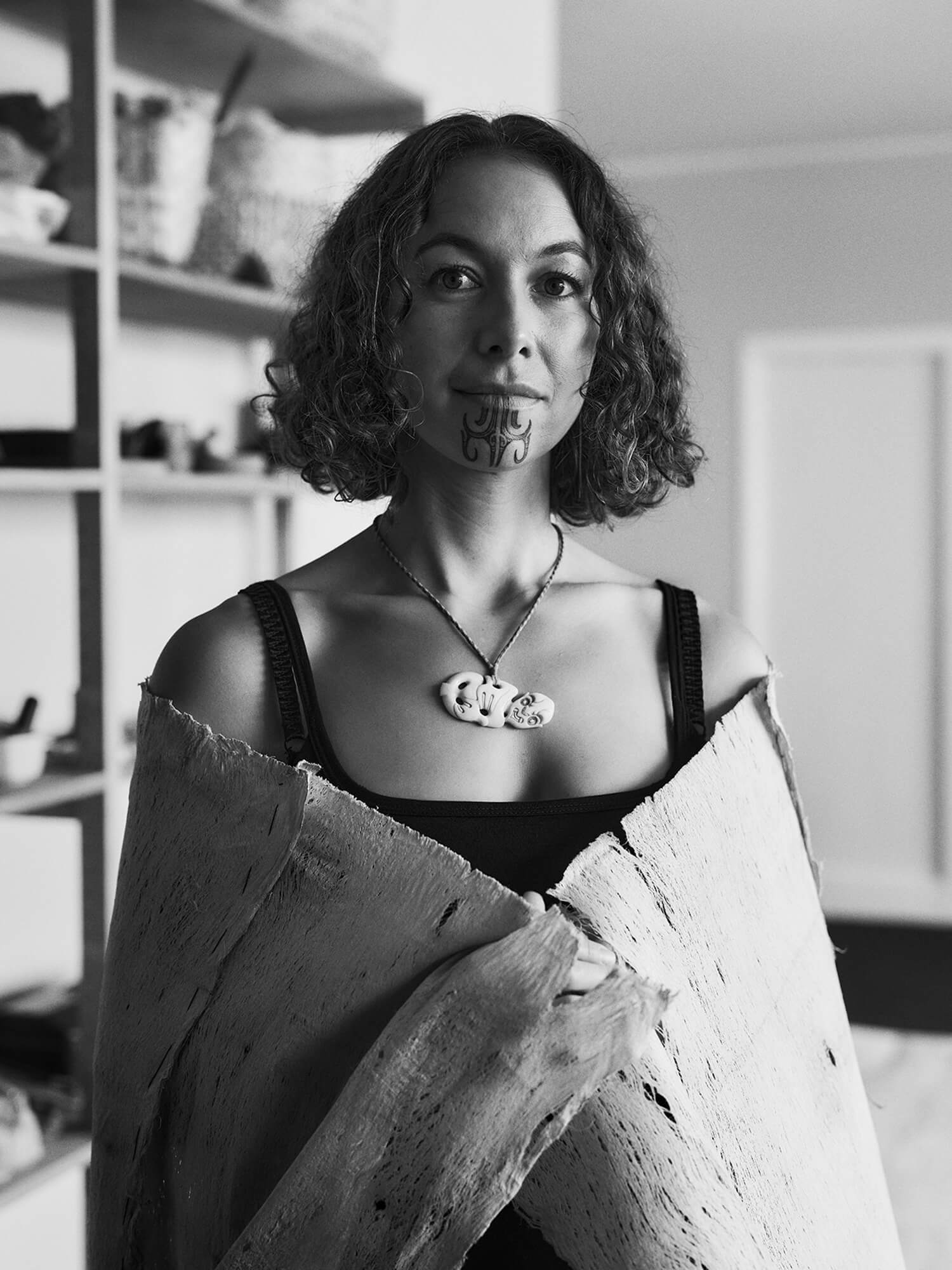
Who are you and where do you come from?
Kia ora, he uri ahau no te Hokianga Whakapau Karakia. No Motukaraka me Mangamuka ahau. Ko Ngāi Tūpoto, Ngāti Here me Te Uri Mahoe ngā hapū.
I am the daughter of Debbie Hindin and Robert (Koro) Harris. My mum is Pākeha and we have Swiss French, Latvian and English ancestry. My grandfather came over to Aotearoa from Europe as a teenager when his mum died. He had a thick french accent and was surprised by the stiff Pākeha culture when he arrived. My Nana’s family were dairy farmers near Christchurch. My mum was raised in Christchurch and moved to Tāmaki Makaurau and later to Te Taitokerau where she met my dad.
On my dad’s side, our whānau still have our papakāinga in Te Huahua valley near our marae Motukaraka. You can see our marae when you head to Kohukohu on the ferry from Rawene. Te Huahua valley is named after my Great x4 Grandfather who together with Ru had our tupuna Ngāhuia Harris. My dad and his 12 siblings were raised on the homestead, tending to the communal gardens down the valley. My aunties still live there and my brother lives just down the road, under our maunga Rākautapu. Mahinga kai is important in our whānau and this keeps our connection to the Hokianga alive. Our whānau has occupied our ancestral whenua for generations, maintaining our pepeha for our mokopuna.
What do you remember most about the place you grew up? What shaped you in those early years?
My mum gave birth to me in Grey Lynn where I grew up in a creative urban Māori community. I went to kōhanga reo and Te Whānau o te Uru Karaka, the rumaki reo at Newton Central Primary School. We had a very political education. We marched against GE as a whānau, fundraised for the anti-war movement in East Timor and learned about colonialism, imperialism and racism early on. I didn’t know it at the time but most of the parents in our whānau were accomplished Māori academics and helped shape our curriculum.
My mum was part of a collective of designers and creatives who owned the shop Moa in Grey Lynn. They sold NZ made clothing, ceramics, kete and jewellery. Their shop is still going strong 40 years on! My aunties were very industrious and creative. They produced big fashion shows and championed women and the environment in the way they drove their business. Many of my aunties were queer and back then people were still homophobic. I became aware early on that I was not part of the mainstream majority because the people I loved the most were put down by casual insults. I would often argue with kids in my class about race relations at the mainstream high school I went to. There was a general racist undertone towards Māori. As a young person I was quite determined to prove them wrong and it made me motivated to excel in my academic studies. I was not interested in being the same as everyone else.
Were there creatives, storytellers or knowledge holders in your whānau who influenced the way you see the world?
Whaea Tamsin Hanly was our teacher at Te Uru Karaka and my aunty growing up. Daughter of the legendary couple Gil and Pat Hanly, she animated the whole world for us and connected political and global issues to the activities we did in kura. One day she read us this awesome book about a magical garden. I remember the illustrations vividly. All the plants were giant and produced enormous vegetables. Afterwards she told us we were going to create an organic permaculture garden and we all cheered. We went to visit Rainbow Valley Farms and learned about permaculture and designed our own garden for the school. Then we had whānau working bee after working bee. We had a carved figure who personified Rongomātane which we did karakia for. Every Friday we spent the whole day in the garden, collecting compost for the worms, planting and weeding. Whaea Tamsin connected us to the world we lived in and made me feel so comfortable and confident in my Māori world view.
At what point did you realise creativity was not just something you enjoyed, but something central to who you are?
My nana, on my mum's side, was a painter. She used to make me illustrated books with her own handmade paper. She also painted portraits of everyone in the family. I used to sit with my nana and paint for hours. Art activities would occupy me for most of the school holidays. My nana used to take me to galleries to see art and taught me about the expressionist painters she loved. Creativity was normalised for me as a young person, especially because my mum was a clothes designer. I always wanted to be an artist as a kid but when I got older and realised it wasn’t very pragmatic so I started saying I’d be an architect instead. When the time came I did go to Elam School of Fine Arts, out of an obligation to my inner artist. I also did a Bachelor of Arts, double majoring in Māori Studies and Film, TV, Media Studies.
Your work centres on aute, Māori barkcloth. For those who might be new to it, what is aute and what does it mean to you?
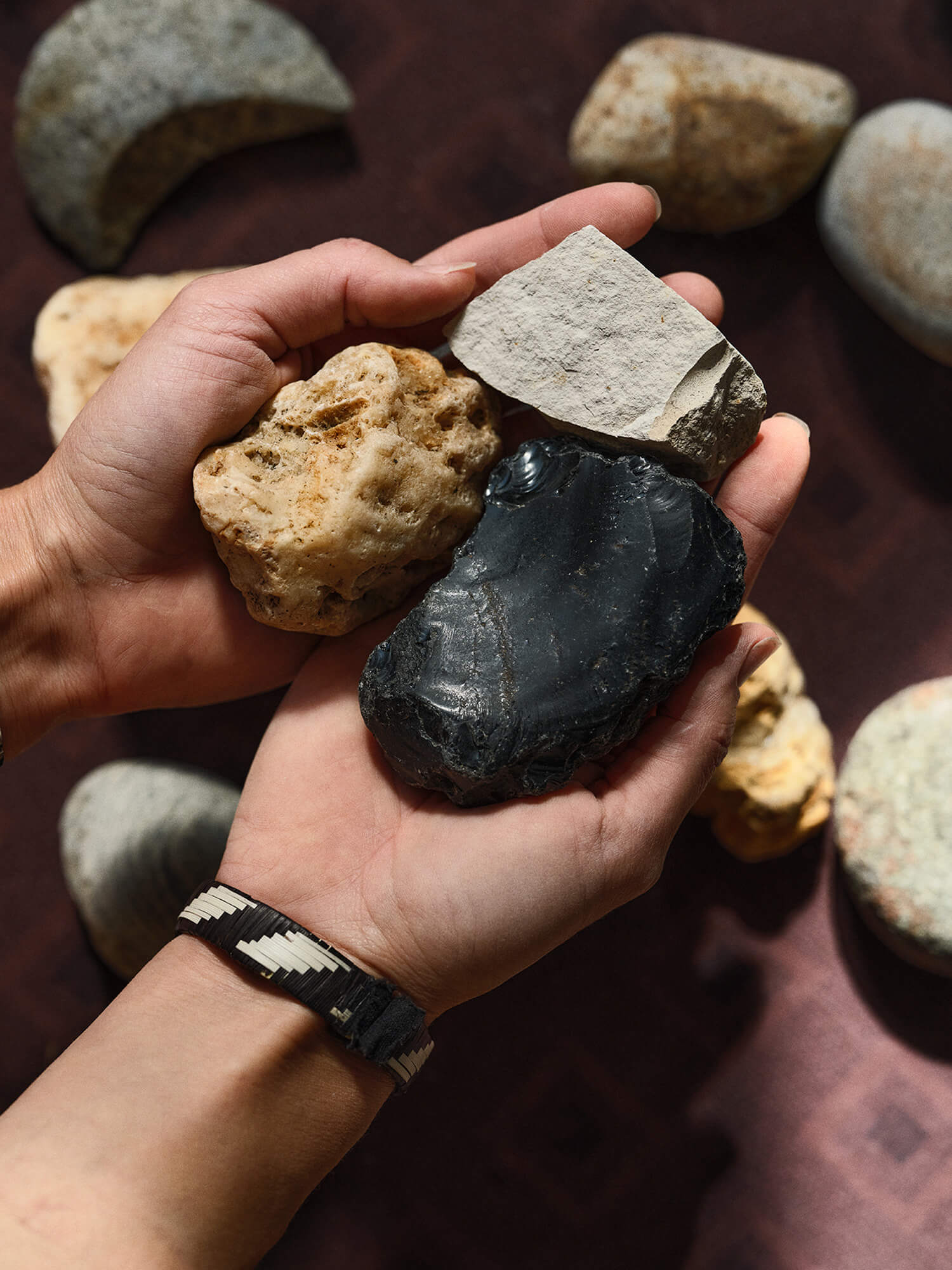
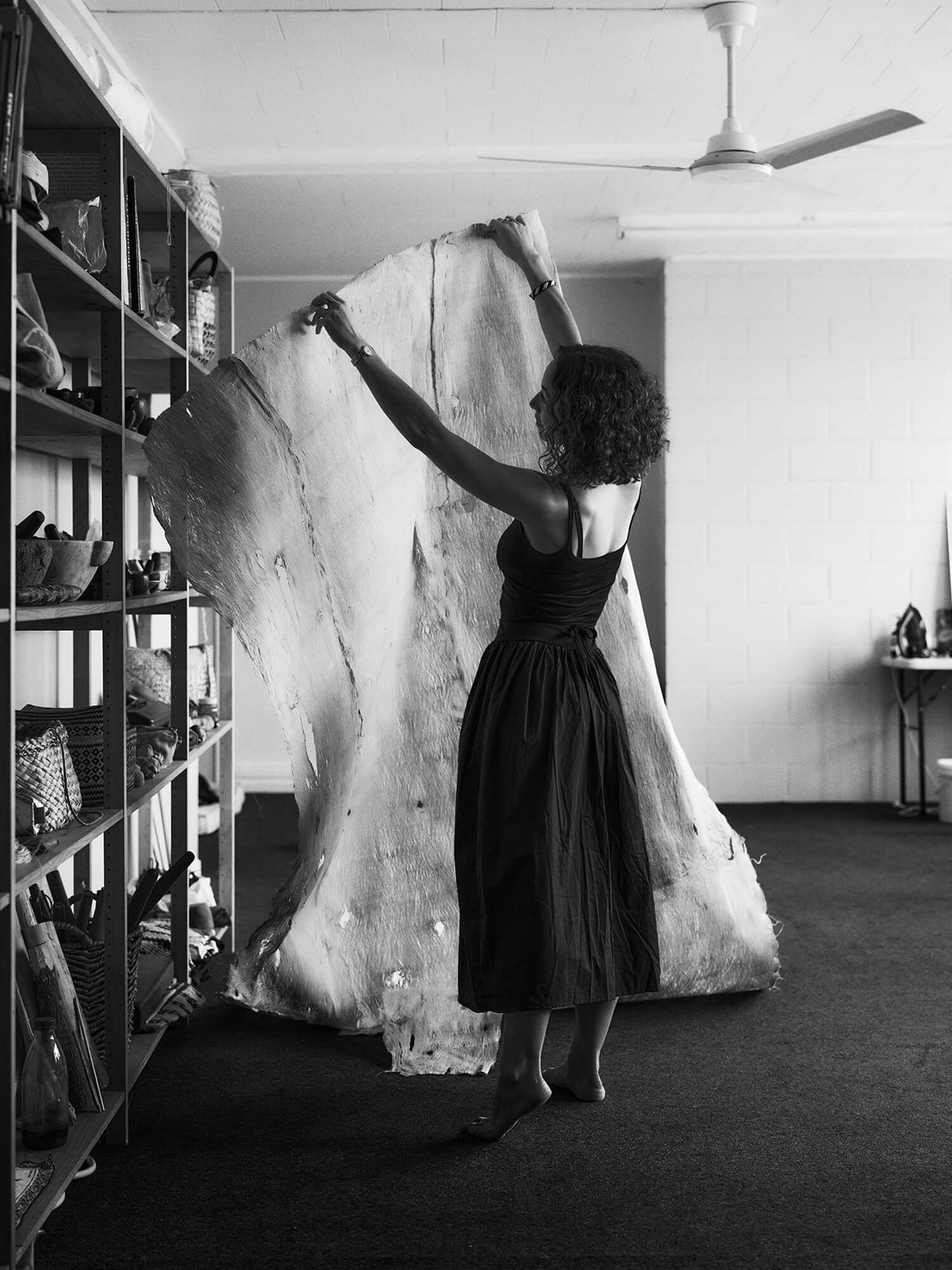
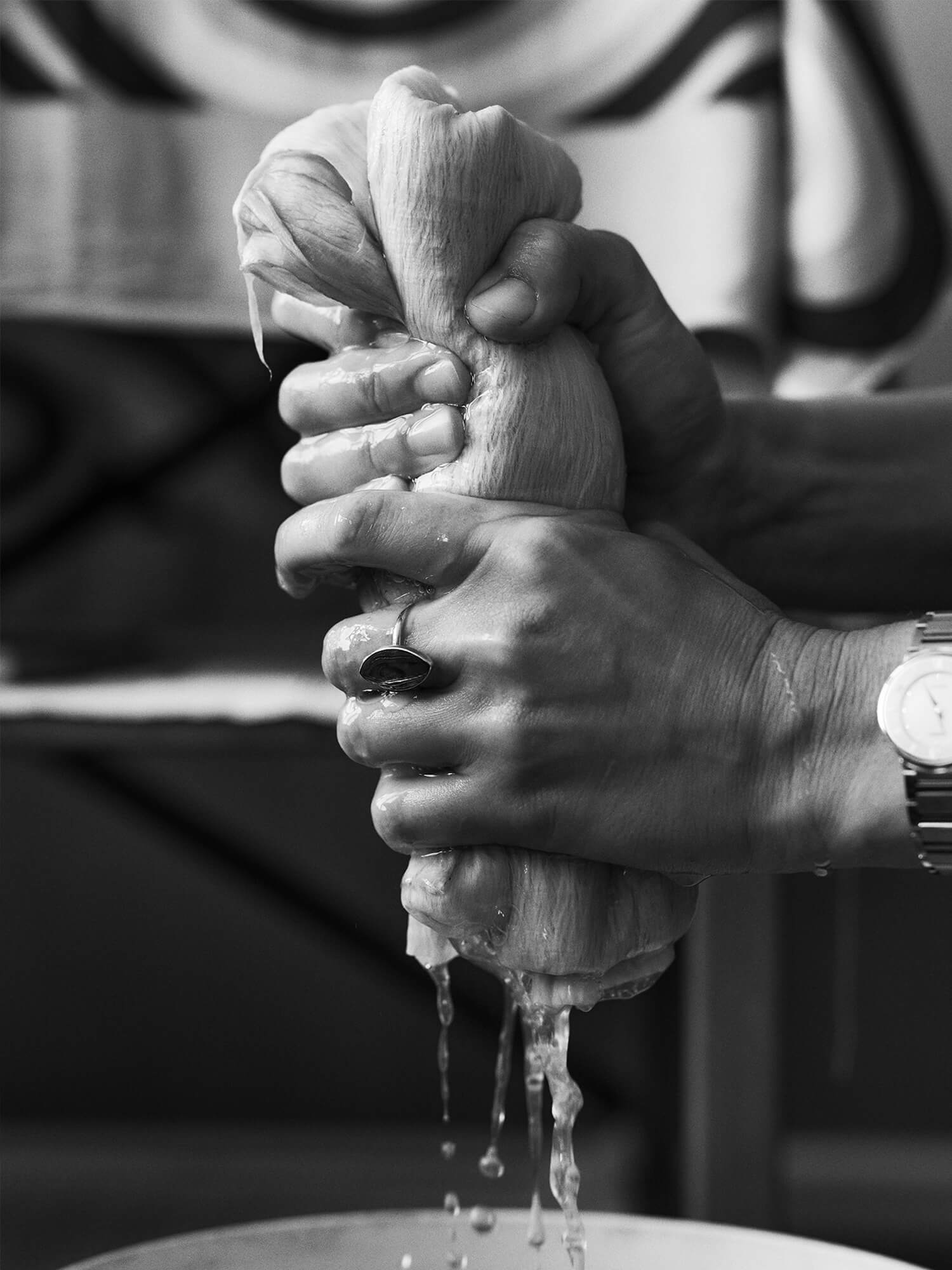
Aute or paper mulberry (Broussonetia papyrifera) is a very special plant and it is used to make tapa cloth here and throughout Te Moananui a Kiwa. For the past 8 years aute has guided the rhythms and cycles of my life as a practicing artist. In the Summer I harvest the bark and beat the bast into cloth. In the Winter I adorn it with earth pigments I have gathered and made into paint.
Researching and reclaiming mātauranga aute has been my overarching goal since I first started doing aute in 2013. Aute was always a precious taonga to our tūpuna. We used it for clothing, manu aute (kites), whakakai (adornment) and wrapping precious taonga, as well as koiwi (bones), whenua (placenta) and iho (umbilical cord).
I care deeply about the way aute is taught, practiced, used and adorned within te ao Māori. As the first maker in generations I have always felt the responsibility to keep the big picture in mind, a thousand year timespan. I know that the possibilities are endless and it will take a few generations of careful transmission for the practice to be secure. It is not something that can be rushed and we are still laying the foundations for the best way to work collectively and wānanga.
Do you remember your first real encounter with a barkcloth? What pulled you in?
The first time I heard of aute my teacher Matua Dante Bonica was showing me the tupu he planted down at his workshop Ruawhaihanga by Waipapa Marae at the University of Auckland. Dante Bonica held many threads of old mātauranga and kept it safe for te ao Māori until the right person came along. He knew about aute when very few people did and his methodology has informed the way I shape my practice and teach aute.
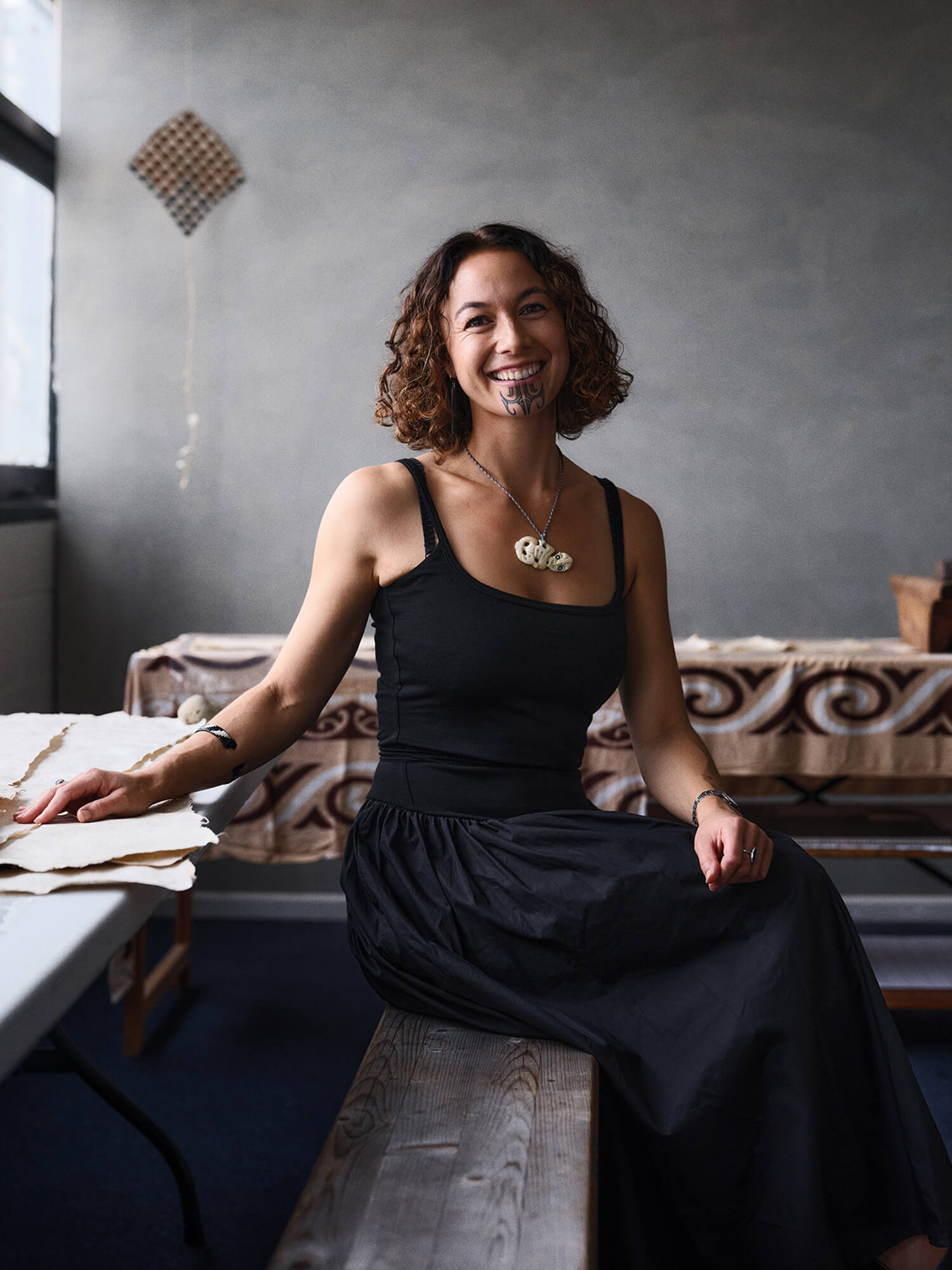
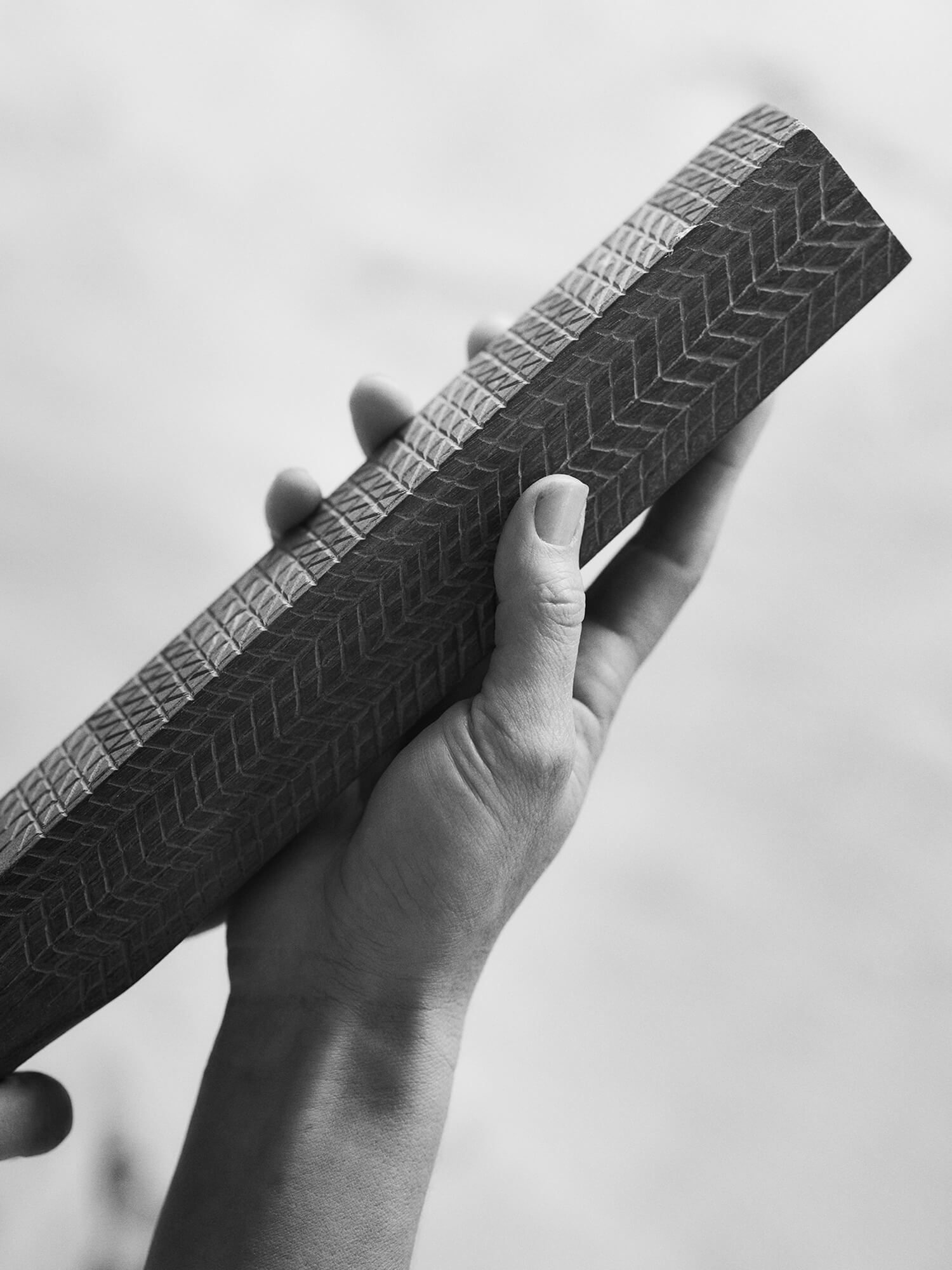
I learned the process of making kapa, Hawaiian barkcloth, in a Hawaiian Studies fibre class under Lufi Matā’afa Luteru at the University of Hawai’i, Mānoa, I made this very fine piece of cloth with a deep watermark in it and dyed it with ‘olena, turmeric. Something clicked for me as I connected kapa to the aute at Matua Dante’s workshop. After my studies abroad I came home and made my first beater with matua Dante using stone tools, pipi shells and sharks teeth. 13 years on it is still my most used beater and my relationship with our local aute plants has expanded as my knowledge and skills have grown.
What I love most about aute is that the whole process is so diverse. It begins with the cultivation of the plant, the carving of the tools, the beating process itself and then the adornment. All of this is underpinned by the maramataka, wānanga (working collectively with other makers), and building interdisciplinary relationships to feed back into the practice and expand the knowledge base.
Aute had largely disappeared in Aotearoa. What made you feel called to bring this practice back?
When I lived in Hawai’i during my undergraduate studies, I was lucky enough to sail on Hōkūle’a and spend time with her incredible captains and crew. Hōkūle’a was born from the dream of the artist Herb Kane, who was an amazing painter. Since Hōkūle’a was built in 1975, the practice of voyaging and navigation has been reintroduced and Hawaiian people are so proud of their wa’a and their collective achievements. Materialising these ancient forms is powerful for not just the people but also the environmental elements we come into relation with. It deepens our connection to our past and our future.
When I was introduced to aute I had an immediate affinity with the tupu and the cloth and felt a strong pull to continue to research and make aute. It was partly my ignorance that made me feel compelled to learn more. I had grown up with the story of the manu aute Tuhoronuku. In our Ngāpuhi traditions, Rahiri flew Tuhoronuku from Whiria Pā in the Hokianga to settle the dispute between his sons Uenuku and Kaharau. I always dreamed of making a large scale manu aute like Tuhoronuku. I think there is so much value in bringing forth these legends so that the great achievements of our tupuna can be appreciated.
In 2023 I made 5 human sized manu aute for the Biennale of Sydney. Two of them are currently hanging in the Fondation Cartier pour l'art Contemporain next to the Louvre in Paris and another is on display at Motat. Aute has shown me that it has the capacity to touch local audiences but also have a global impact.
In many Pacific cultures, barkcloth knowledge has been held by wāhine. What does it mean for you to step into that space and continue that line of knowledge?
Just to add to that…in many Moana cultures there is also an unbroken tapa cloth making lineage. As a wahine intent on reclaiming a knowledge system there are unique challenges and considerations to navigate. I am at once continuing a line of knowledge as well as generating (k)new knowledge. In the early days I felt overwhelmed by this and ultimately blind faith kept me moving forward. In the beginning, there was no certainty that I would be able to find plants, teachers, or even become adept at making the cloth. For example, it took me five years just to become familiar with the process of beating the cloth, only to return home to apply those learnings on our plants here and find it was like starting again from scratch.
We are lucky that our toi Māori practices have strong whakapapa and tikanga and I lean on this mātauranga to guide me. Aute is also part of Te Whare Pora, the House of Fibre Arts and there are connections here too that are important.
Every year my practice grows and I am able to create things that I would never have considered possible three years ago. I think it is easier now that I have taught a few more makers and they are also responsible for passing on the practice. It is so important to have community and think about these things collectively. The practice of aute is transformative in the sense it transforms bark into soft cloth but it has also transformed me and I know it has a lot to offer our communities.
How does your mahi reflect the way you see the world as a Māori woman?
The whakapapa of aute is a lineage that comes through wāhine. When I’m making aute, especially collectively, it makes me feel very connected to my tūpuna wāhine and our future mokopuna. Aute keeps me in sync with the tides, the moons, the seasons and my own body. It allows me to practice my culture everyday. It requires me to maintain relationships and my reo. My practice needs continual tending and it teaches me about reciprocity. It is also humbling and to learn about aute is to learn about the universe.
Aute is the fabric that stores knowledge, adorns bodies, represents the excellence and beauty of our Māori world.