

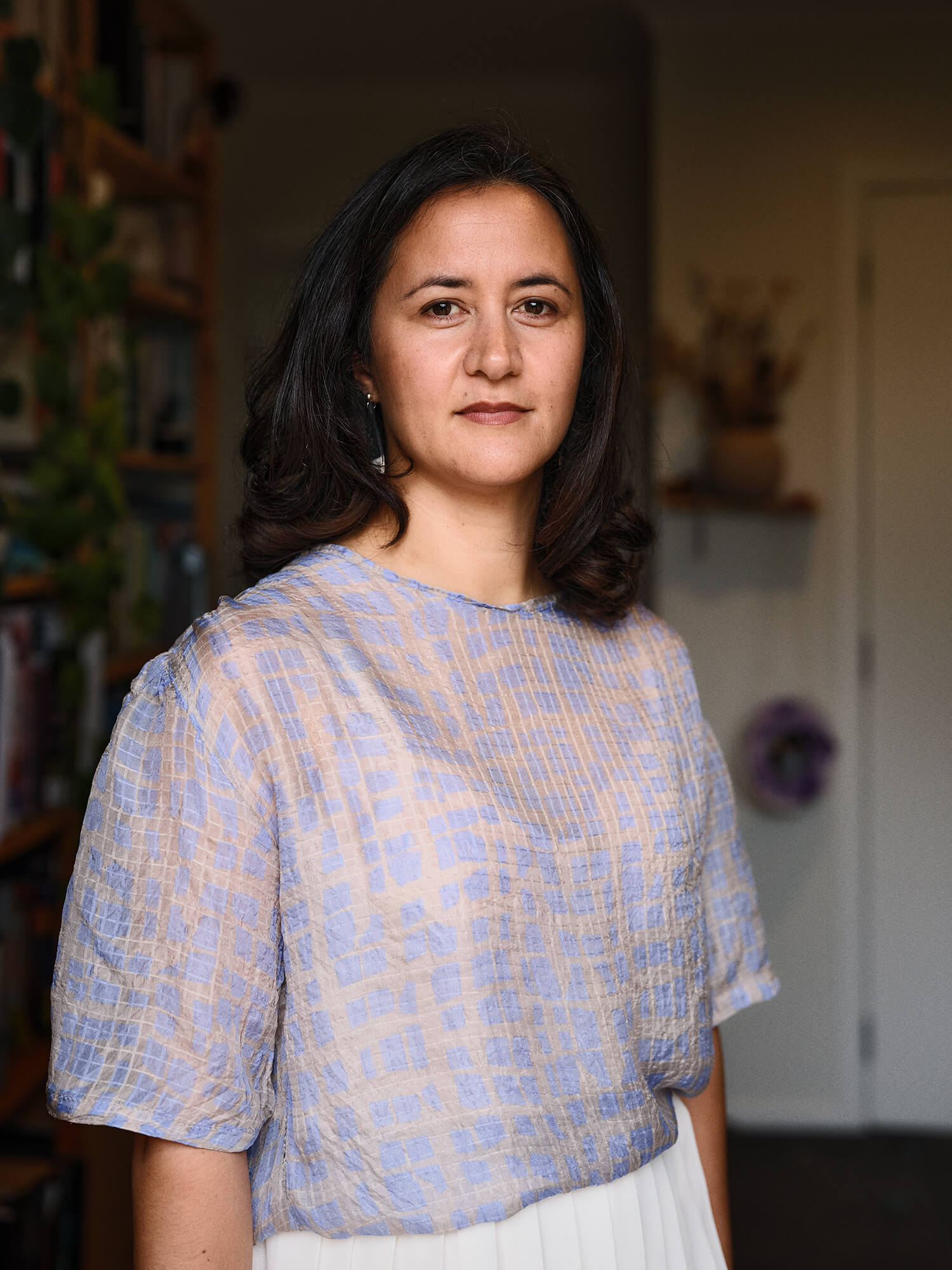
Dr Awanui Te Huia
The Way Home
For many people, language is something they learn.
For others, language is something they return to.
The difference matters.
Te reo Māori carries more than vocabulary and grammar. It carries relationships, histories, responsibilities, ways of seeing the world, and connections that stretch across generations. For those reconnecting with a language that should never have been interrupted, the journey often involves far more than acquiring new words.
It asks people to navigate uncertainty, vulnerability, grief, hope, and belonging.
Throughout her work as a researcher, educator, and advocate for te reo Māori, there is a consistent focus on understanding those experiences with care. Not from a distance, but alongside the people living them. Her work sits at the intersection of psychology, language revitalisation, and lived experience, yet remains grounded in a simple understanding: people thrive when they feel supported enough to grow.
Rather than viewing language learning as an individual achievement, she places it within a wider network of relationships. Whānau, communities, teachers, mentors, and environments all play a role in shaping whether a person feels able to take the next step. Progress is rarely linear. Confidence comes and goes. Setbacks are part of the process. The challenge is not perfection, but persistence.
That perspective reflects a broader belief about revitalisation itself.
The future of te reo Māori will not be secured by institutions alone. It will be sustained through everyday use. Through conversations around kitchen tables. Through friendships. Through classrooms. Through children growing up hearing and speaking the language as something natural and ordinary.
There is a generosity in this approach. An understanding that people arrive at te reo from different places and carry different histories. Some inherit the language. Others reclaim it. Both journeys require patience.
Across her research, teaching, and writing, the goal remains remarkably consistent: creating pathways that make the journey easier for those who follow.
Not by lowering expectations.
But by helping people recognise that they already belong.
That the language belongs to them too.
And that returning home, no matter how long it takes, remains possible.
Growing up, what did te reo Māori feel like in your world?
Whakautu: Growing up, te reo was largely a language of aroha. It was a language used by my Koro, who I spent most school holidays with alongside our whānau. Although te reo wasn’t spoken much around us, my Koro was religious about watching Te Karere.
When did te reo become personal in a way that research alone couldn't contain?
Te reo was always personal, the rangahau component developed much later. After completing a reo Māori major at Te Herenga Waka, I still wasn’t great at communicating about everyday kaupapa in te reo. Partly, this was because of language anxiety, not having a lot of everyday practice outside of the language learning context, and not being able to easily apply what I was learning. I subsequently spent a year teaching English in Japan at which point I began learning Japanese through immersion classes on a Saturday morning. The classes taught me language patterns that I could apply directly after class. I could use the sentences in shops, with colleagues and students. This helped me make the connection between learning a language for functional purposes and learning a language as a way of connecting to the language of my tūpuna. After gaining this exposure to another way of language learning, I came back to Aotearoa and approached learning te reo through a different lens. I enrolled in as many rumaki spaces as possible, following kura reo around the motu. From these kaupapa rumaki, I gained a set of social relationships where te reo was the dominant language. Each of these experiences are very much integrated into my motivation to explore and share rangahau that helps the process of learning te reo easier for others who are in the process of reclaiming their reo tuku iho.
In all your years studying what keeps people with te reo, what do people most consistently underestimate about that journey?
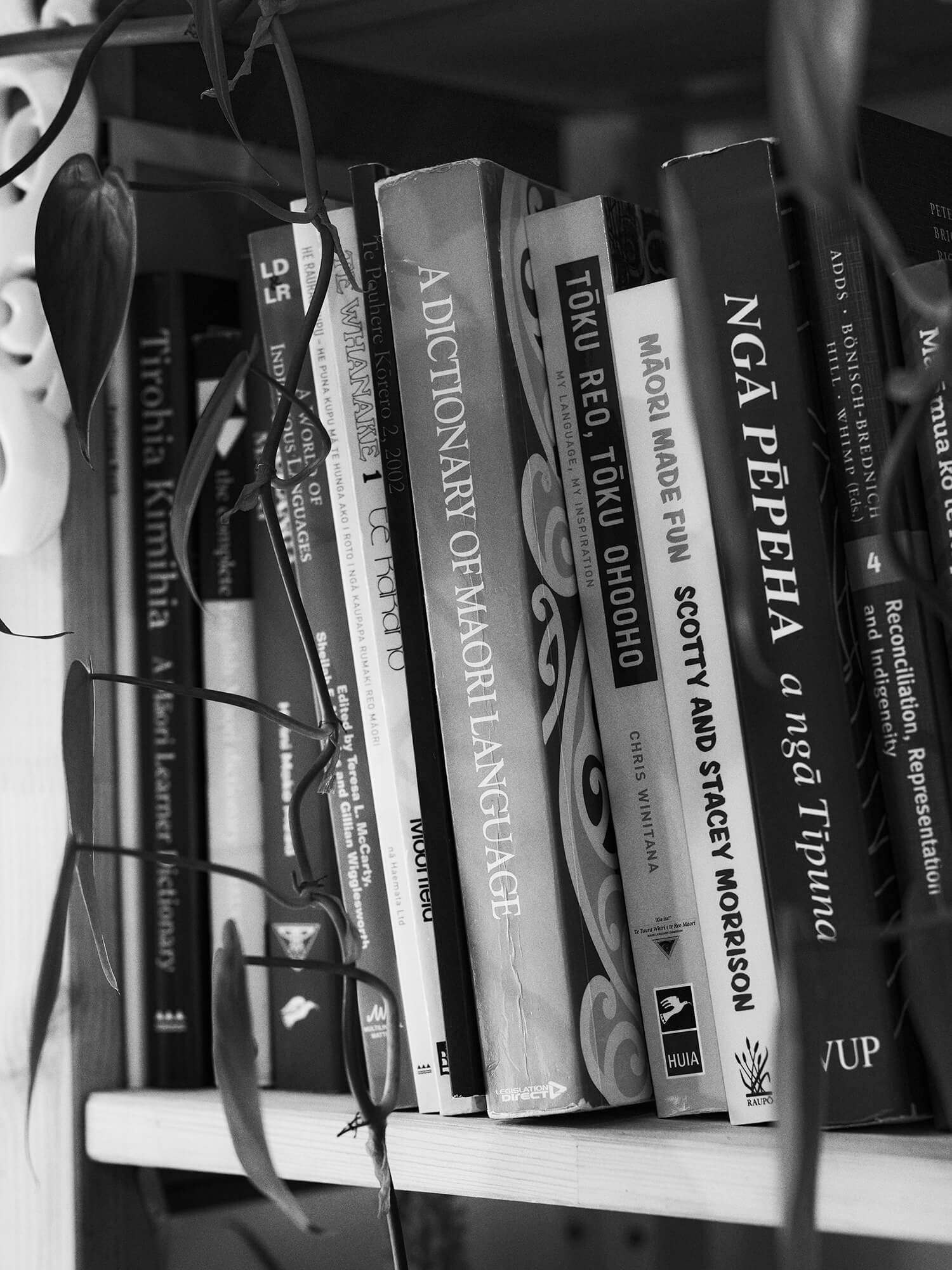
Each person will have a different experience of learning te reo. Learning a reo tuku iho comes with a number of additional considerations. Because of the history of Aotearoa, te reo can be often used as the bridge that allows tangata whenua to come back to ourselves culturally. Therefore, the weight associated with learning te reo can feel high stakes. When we’re in high stakes learning situations, we can fall into an unconscious trap of focusing on our self-evaluation, which takes away from our ability to encode new information, memorise that information and then recall it when we’re asked to kōrero. Learning te reo as a reo tūpuna is a precious transition, therefore, having the right tools to help us along this haerenga is very important.
Are the hardest barriers to language learning external, or do they live somewhere inside us?
In terms of other language specific challenges, people tend to be learning te reo as the first second language that they’ve attempted to acquire. With learning a second language, we’re often attempting to learn how best to acquire a language, which takes time, repetition, expected learning curves (i.e learning, forgetting and then re-learning) in order to reach a stage where language recall becomes more readily available and a person can then use the language fluidly. There are language features in te reo that are specific to our culturally embedded way of thinking, so for monolingual English speakers, using English as a reference point is an unhelpful strategy.
Has your own relationship with te reo ever surprised you?
With my own relationship with te reo, I have a personal connection to te reo, but also a professional relationship. At a personal level, becoming a māmā allowed me to have te reo Māori normalised in my daily life. They give me motivation to improve my reo, understanding that the journey is never complete, and context for reo use
You sit across psychology and te reo Māori. Where do those two ways of understanding people meet?
As someone who has trained through the School of Psychology and Māori Studies, I’m very conscious about where theories are derived from and how we might understand theories in a way that is aligned with whakaaro Māori. A major consideration is in reo Māori contexts, we’re often needing to center ourselves as part of a wider collective. This brings up many emotions for people who may have experienced the impacts of colonisation through a sense of distance from our collective identities. When I’m working with clients and tauira around te reo anxiety, we typically focus on making unconscious processes conscious. Once we’re more able to identify our emotions, this helps us sit these emotions from a position of aroha.
In academic spaces, mātauranga Māori can get filtered through Western frameworks. How do you protect its integrity from the inside?
In academic spaces, mātauranga Māori is often protected by Māori academics. In order to prevent mātautanga Māori from being assimilated by Western frameworks, we work well as collectives. This often involves mahi ngātahi, critically analysing how we’re framing discussions, or theories, how we’re applying mātauranga in institutional settings, and which parts of mātauranga we share across various contexts.
What have you had to unlearn, personally and academically, to do this work honestly?
In terms of what I’ve needed to unlearn from being trained through the School of Psychology is how I measure success and what validation looks like in academic spaces. Academia is hierarchical, meaning that there is a very clear ordering of how academics progress from a research assistant through to professorship, professorship being an ultimate professional milestone. I was trained early on that a ‘good’ scholar is someone who is consistently producing academic outputs, such as journal articles in highly ranked journals, and presenting at academic conferences, including international conferences even if you’re the only Māori in the room. My mentor in psychology, the late Professor James Liu, was incredibly hard working, and expected the same from his students. It wasn’t until I published my first book that I started to reassess the milestones and measures that I’d been using to validate my professional progress.
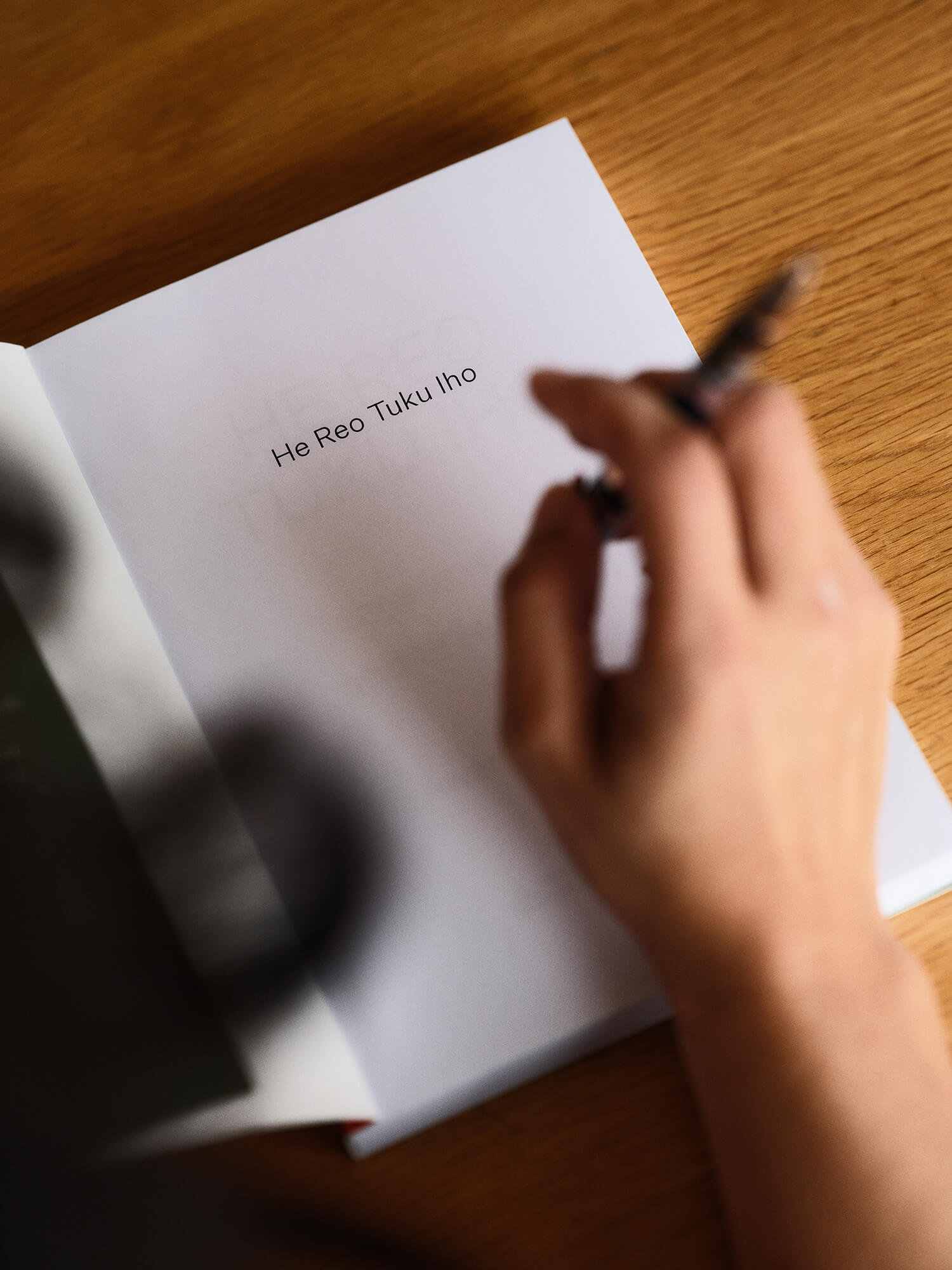
At the time I published my first book, He Reo Tuku Iho: Tangata Whenua and Te Reo Māori, I also began sharing little bits and pieces on social media about rangahau. A lot of the hapori that I connect to on those social platforms help me to unpack some of my own thinking, and allow me to share thoughts on kaupapa relating to rangahau. I gained more appreciation for how our rangahau could impact on the lives of people who I actually wanted to reach all along. The revitalisation of our reo will come from our hapori. Therefore, making sure that our hapori have access to rangahau that can support our collective aspirations is something that I continue to focus on.
It was very important for me to remain grounded in my relationships. Comparing what I was learning with the lived realities of people I know and love, and questioning whether theories were fit for purpose. For me, psychology is just one tool of many that helps to work through challenges that we’re experiencing as a collective.
Identity formation is central to your research. Was there a moment your own sense of identity shifted in a way you didn't expect?
My own identity formation has not been particularly linear. My identity has shifted based on the environments that I have been surrounded by. We were a whānau who moved regularly. Each of the hapori that we moved to had its own environment, which impacted on which identities were available to me at different times of my life.
What have tauira taught you that reshaped your thinking?
At a professional level, tauira have helped to shape my thinking immensely. I am always grateful to tauira who I form relationships with. I become invested in their journey, so when they grow, I feel a huge feeling of aroha throughout those learning experiences. They also help me to shape my thinking, they test me, and I readjust as I’m given feedback. Tauira allow me to engage in praxis where research and practice come together. If we’re purely researching, without tauira, we would not see how theories land in reality.

You've researched how both Māori and Pākehā engage with colonial history. What does it look like when understanding actually shifts in someone?
Through the rangahau about how Māori and Pākehā engage with colonial history, both groups are learning at different time points. For tauira Māori, they often report having a lived experience of colonisation, however, being taught explicitly about our colonial history allows them the language that they need to articulate the experiences across contexts. However, tauira Māori also noted that the opportunity to learn about our pre-colonial history was also incredibly impactful. When we learn more about the brilliance of our tūpuna, their haerenga, their ability to manage complex relationships, navigating and living in our taiao, these are the stories that tauira Māori enjoyed most. Learning about our colonial history is important as it allows us to contextualise our current social and political dynamics that we navigate through.
What shifts look like for Pākehā tend to happen when they’re able to sit in spaces of discomfort with the new knowledge that they’re acquiring. When they step away from wanting to control situations where they sense discomfort. It is important that they nohopuku, or sit in silence with some of the discomfort and work through it with others who are experiencing similar processes. When Pākehā can acknowledge their own privileges and the ways in which they benefit from colonisation, we have a better chance of seeing power-sharing happening in our society. The sharing of power and resources in real and meaningful ways is necessary for Aotearoa to grow.
Biculturalism gets discussed constantly. Where do you actually see it working, and where is it still just language?
Two examples that come to mind are at our Paa at Mangatoatoa. We have two co-Chairs of our Paa, both with significant roles. One is our pā whakawairua, our āpotoro Hone Hughes, who has a whakapapa connection to our Paa and guides us culturally. The other co-Chair is our Uncle Derek Roberts, married to our ruahine Moe Roberts. Uncle Derek is Pākehā, and applies his sphere of influence to support our Paa in ways that are unassuming but have significant impacts. One of the examples is the establishment of our Whare Hauora at Mangatoatoa, where whānau and those from our rural community in Tokanui can access free wrap around healthcare, which has seen significant benefits from whānau users.
The second example comes from the work done by Pūniu River Care, which has been operating for over a decade and continues to create significant social, environmental and economic impacts in the Waipā region, as well as providing employment to many whānau and locals. In the past century, Waikeria Prison and Tokonui psychiatric facilities were the two main employers, therefore having an uplifting taiao related kaupapa such as Pūniu River Care in the rohe is also significant. Pūniu River Care has planted over 2 million trees across the Waipā and King Country, establishing 142 hectares of native rākau sourced from seeds across the rohe. They’ve completed over 60 kilometres of fencing along farms to prevent erosion and protect our awa. Bringing this back to biculturalism, it’s important to note that some of the work that has been achieved through PRC is a result of the bicultural relationships forged over a long-term period between our kaumātua and local council as well as the relationships with Pākehā farmers in the community (Te Huia, Maniapoto-Ngaia, & Fox, 2022).
Leading Manawa ū ki te reo Māori, what did that work reveal about what real commitment looks like?
Leading the Manawa ū ki te reo Māori project, I could see that when we use terms like ‘commitment’ to describe why some people progress towards their reo goals, these terms can become a double edged sword. When we’re learning our reo tuku iho, there are ebbs and flows. If a learner attributes their wins to things like ‘personal commitment’ to te reo, then the reverse can also be true when things aren’t going well.
If we think about what it looks like to create meaningful reo change, it comes down to our relationships and our environment. Do we have occasions to use te reo? When we have occasions to use te reo, are others in our environment receptive to us using what we know? Do we feel like our bodies are regulated enough to try using our reo even though we know we might make a mistake? If we have the right tools and support to work through the times when we’re struggling to push through. Providing whānau with the psychological tools that they need to make reo progress has been a passion of mine, which recently resulted in me designing a course titled “Kia puāwaitia te reo”. Working through the factors that support our emotions can improve learners chances for reo Māori success, and the tools can be applied in other areas of their lives too.
There's a difference between learning a language and living inside it. How do you see that line?
Learning a language requires us to be surrounded by it as much as possible. When we’re immersed in te reo, we can start to see the shifts happen more readily. Our tinana learn to adjust to hearing our reo as something that’s external to something that lives within us.
Have there been moments where the urgency of this work became undeniable?
In terms of feeling a real sense of urgency for te reo revitalisation, this came during the time that I was a student in the course Social and political development of te reo Māori (Te Aukorimiha, Te Auripmiha o te Reo), taught by Dr. Winifred Bauer, a course I subsequently taught many years later. This course impressed upon me the urgency that is required in order for the changes that we need to see happen for te reo. Through the Manawa Ū project, we saw the passing of some of our mentors, such as Ahorangi Te Wharehuia Milroy (CNZM), and Hema Temara, both native speakers who had massive impacts on te reo and revitalisation. When we see our mentors passing the sense of responsibility for change, and holding on to their teaching becomes more salient.
In your teaching, what tells you something has truly landed, beyond comprehension?
When I see tauira that I have taught in the past pushing through their own self-perceived barriers I feel a massive sense of aroha for them. It makes me feel inspired and motivated to continue teaching, and being a facilitator for the change that I know is possible for our tauira.
This work asks for patience and persistence across a lifetime. What sustains you in that?
The combination of teaching and rangahau/writing. I enjoy the energy that tauira give, I enjoy seeing them reach a comprehension breakthrough, I appreciate their tears and their struggles, and I can empathise with what they’re working through. Teaching is part and parcel of my own growth. I also appreciate being a learner, and enjoy experiencing how others teach, partly this helps me to reflect on my own teaching practices.
In a time where te reo is more visible than ever, what still feels fragile?
I sincerely appreciate being a beneficiary of the years of work from the Te Atiawa, Ngāti Raukawa and Ngāti Toa and the wider kaupapa of Whakatupuranga Rua Mano which has resulted in Ōtaki becoming a bilingual town.I work on the main street of Ōtaki, and hearing te reo Māori being used outside my window casually, gives me hope for the future. I appreciate that our tamariki can attend, kōhanga, kura, and after kura they go to kauora, which are reo Māori speaking swimming lessons. We were sitting in the mall yesterday and the song “Proud to be Māori” (by IllumiNgāti) was playing as the background music. Having worked in that same mall during high school, this was a stark contrast to what would have been played in the past. We’re making changes however, there are still areas where te reo is still fragile. For example, a lot of whānau may want to make reo changes in their kāinga and whānau, however, a lot goes into creating such shifts. Whānau must be supported to create this change.
When you think about the future of te reo Māori, what gives you certainty, and what still requires your careful attention?
What gives me hope that te reo will survive is that our tamariki have far more opportunities to hear te reo being spoken and normalised across contexts. Te reo is the language that comes most naturally, it’s the language that they use when they’re experiencing the array of human emotions. This is what gives me hope. I know that there is a lot of collective work to do to ensure that our tamariki have hapori where their language is normalised outside of controlled language domains such as kura. Heoi anō, kia koke tonu tātou!
Reference:
Te Huia, A., Maniapoto-Ngaia, M., & Fox, R. (2022). He oranga wai, he oranga whakapapa: Critical change in the health of the awa through Kaupapa Maori-led Kaitiakitanga practices.